

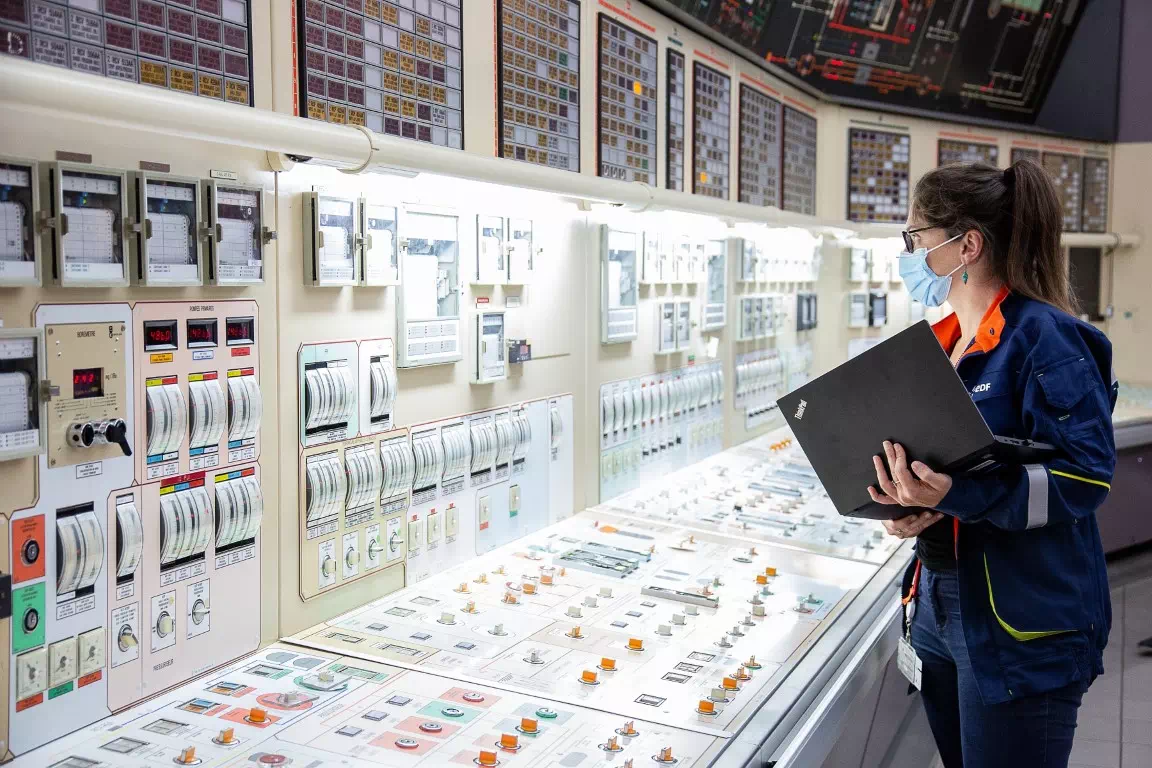
The FIND project has reached an important milestone with the publication of Deliverable D2.2, defining the specifications for innovative instrumentation designed to support the management of incidents and accidents in nuclear power plants.
Developed under the European FIND project (Future Instrumentation and coNtrol based on innovative methods and Disruptive technologies for higher safety level), the deliverable establishes the technical foundations for a new generation of sensors capable of operating under some of the harshest conditions encountered in the nuclear sector.
Supporting safer decisions during nuclear incidents and accidents
In emergency situations, operators must make rapid decisions in environments characterised by uncertainty, degraded conditions, and limited visibility. FIND aims to strengthen decision-making capabilities by developing advanced instrumentation that can continue to provide reliable information during design basis and severe accident scenarios.
Deliverable D2.2 serves as a reference framework for future technological developments within the project, particularly in Work Packages 3 and 4, by defining functional requirements, environmental constraints, and expected performance levels for candidate technologies.
Three critical use cases for enhanced nuclear safety
The specifications focus on three priority applications identified as having strong safety benefits:
1. Water level measurement in reactor sumps
During accident scenarios such as a Loss-of-Coolant Accident (LOCA), maintaining an accurate understanding of water inventory inside reactor sumps is essential for cooling, recirculation, and long-term accident management. Existing technologies can face reliability challenges in harsh environments, especially under accidental conditions involving heat, pressure, humidity, radiation, chemical contamination, and debris.
FIND explores robust sensing approaches capable of operating in these demanding environments to provide operators with more reliable situational awareness.
2. Rapid localisation of coolant leaks during a LOCA
Identifying the location of a breach in reactor coolant systems remains a major challenge when such undesired event occurs. Current approaches often rely on indirect methods or time-consuming investigations.
FIND proposes specifications for instrumentation able to localise leaks with sufficient precision and short response times, potentially helping operators isolate faults more efficiently, improve accident diagnosis, and strengthen emergency response.
3. Detection of fission products during severe accidents
In severe accident conditions, understanding the composition of the containment atmosphere becomes critical for both onsite and offsite emergency response.
The project investigates advanced sensing methods for detecting key fission products such as iodine species and xenon inside containment buildings. Such capabilities could improve understanding of accident progression (like the level of core degradation) and support better-informed protective actions.
From specifications to innovation
The D2.2 deliverable builds on scientific simulations, operational experience, and expert input from multiple European partners. It confirms the technical relevance of the selected use cases while providing clear objectives for future research and testing activities.
Beyond severe accident scenarios, several of the proposed technologies could also benefit routine maintenance and incident management, potentially accelerating industrial adoption and technology maturity.
As FIND moves into the next development phase, these specifications will guide the creation and validation of innovative instrumentation designed to contribute to higher levels of nuclear safety across Europe.